Healthy Weight Loss Eating: What to Eat (and Avoid) to Lose Weight Naturally
Healthy Weight Loss Eating: Where Real Change Begins
Let’s be honest — losing weight isn’t just about counting calories or skipping dessert. It’s about rethinking how you eat — not just for a week, but for life. The truth is, healthy weight loss eating isn’t a strict diet or punishment. It’s a long-term, sustainable shift in how you fuel your body — and it starts with the choices you make each day.
In this guide, we’re diving into what healthy weight loss eating really looks like. No fad diets, no starvation tactics — just simple, science-backed nutrition strategies that actually work. Whether you’re just starting your journey or looking to break through a plateau, this article will show you what to eat, what to avoid, and how to build meals that keep you full, satisfied, and steadily losing weight.
Because when it comes to getting fit — it’s not just about working out harder. It’s about eating smarter.
🥗 How to Build a Healthy Weight Loss Eating Plan
Eating to lose weight doesn’t mean eating less — it means eating better. The key is building meals that support fat loss without leaving you hungry or tired. A healthy weight loss eating plan isn’t just about calories — it’s about balance, nutrients, and timing.
Here’s how to build a daily plan that works:
⚖️ 1. Focus on Nutrient Density
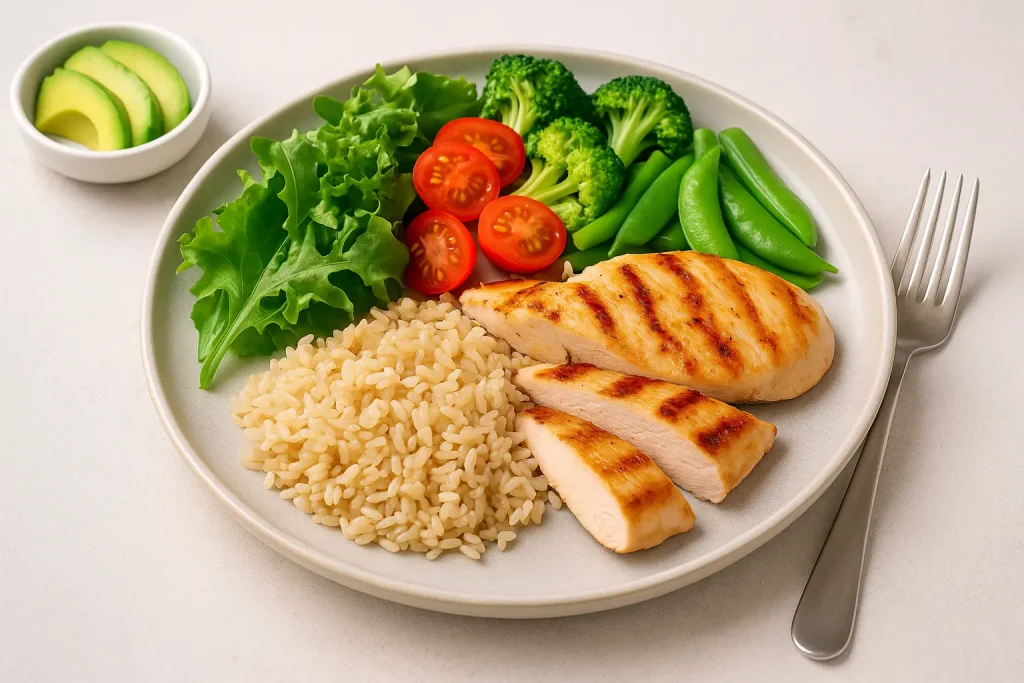
Swap “empty calories” for nutrient-rich foods. That means choosing whole, unprocessed ingredients that are packed with vitamins, minerals, and fiber — not just carbs and fats.
Choose more of:
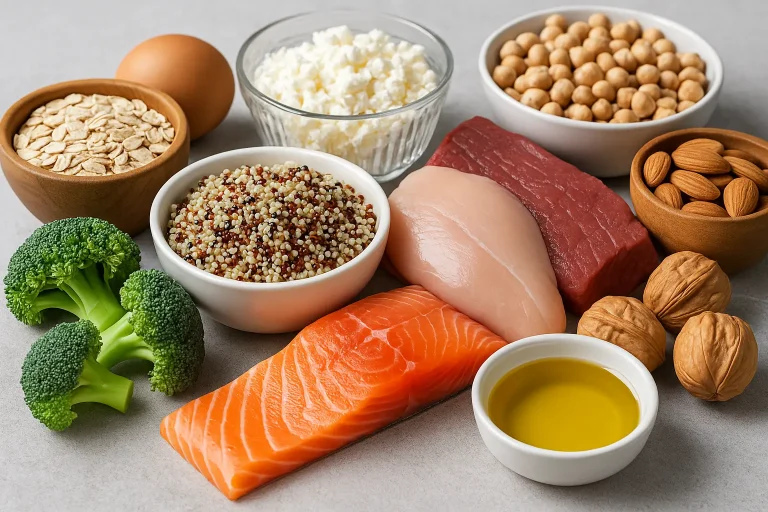
- Leafy greens and colorful veggies
- Lean proteins (chicken, tofu, eggs, legumes)
- Whole grains (quinoa, oats, brown rice)
- Healthy fats (avocado, olive oil, nuts)
✅ These foods keep you full longer, reduce cravings, and support metabolism.
🥚 2. Prioritize Protein at Every Meal
Protein is your best ally in healthy weight loss eating. It helps you:
- Maintain muscle while losing fat
- Feel fuller longer
- Stabilize blood sugar levels
Tip: Include 20–30g of protein per main meal. Think eggs at breakfast, grilled chicken at lunch, salmon at dinner.
🕐 3. Time Your Meals Smartly
Don’t skip meals. Instead, create a rhythm:
- Eat within 1 hour of waking
- Space meals every 3–4 hours
- Avoid late-night heavy eating
This helps prevent bingeing and keeps your metabolism steady throughout the day.
🧂 4. Limit Processed Foods, Sugar & Liquid Calories
Even “healthy” snacks can sabotage your goals if they’re processed. Watch out for:
- Sugary granola bars, flavored yogurts, and fruit juices
- Hidden sugars in sauces and condiments
- Ultra-processed frozen meals or snacks
These small changes are key to building a sustainable healthy weight loss eating routine that fits your lifestyle.
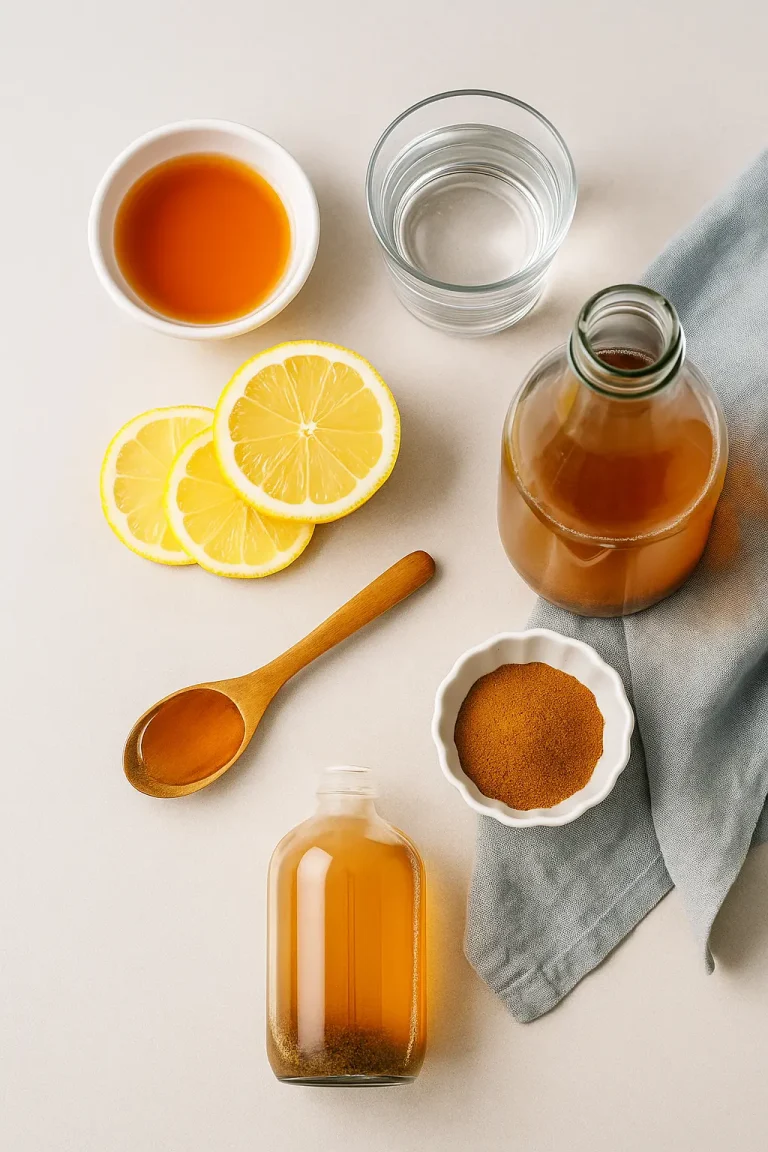
Bonus Tip: Cut sodas — even the diet ones. Replace with infused water, herbal tea, or sparkling water with lemon.
Best Healthy Foods for Weight Loss (With Meal Examples)
You don’t need to starve yourself or eat bland salads to lose weight. In fact, healthy weight loss eating can be delicious, satisfying, and full of variety — if you choose the right ingredients.
Here are the best food categories to focus on, along with simple meal ideas you can actually enjoy:
1. High-Fiber Vegetables
Vegetables are your best friend when it comes to weight loss. They’re low in calories but packed with fiber and volume, which helps you feel full without overeating.
Eat more of:
- Broccoli, cauliflower, and cabbage
- Zucchini, carrots, and bell peppers
- Leafy greens like spinach, kale, arugula
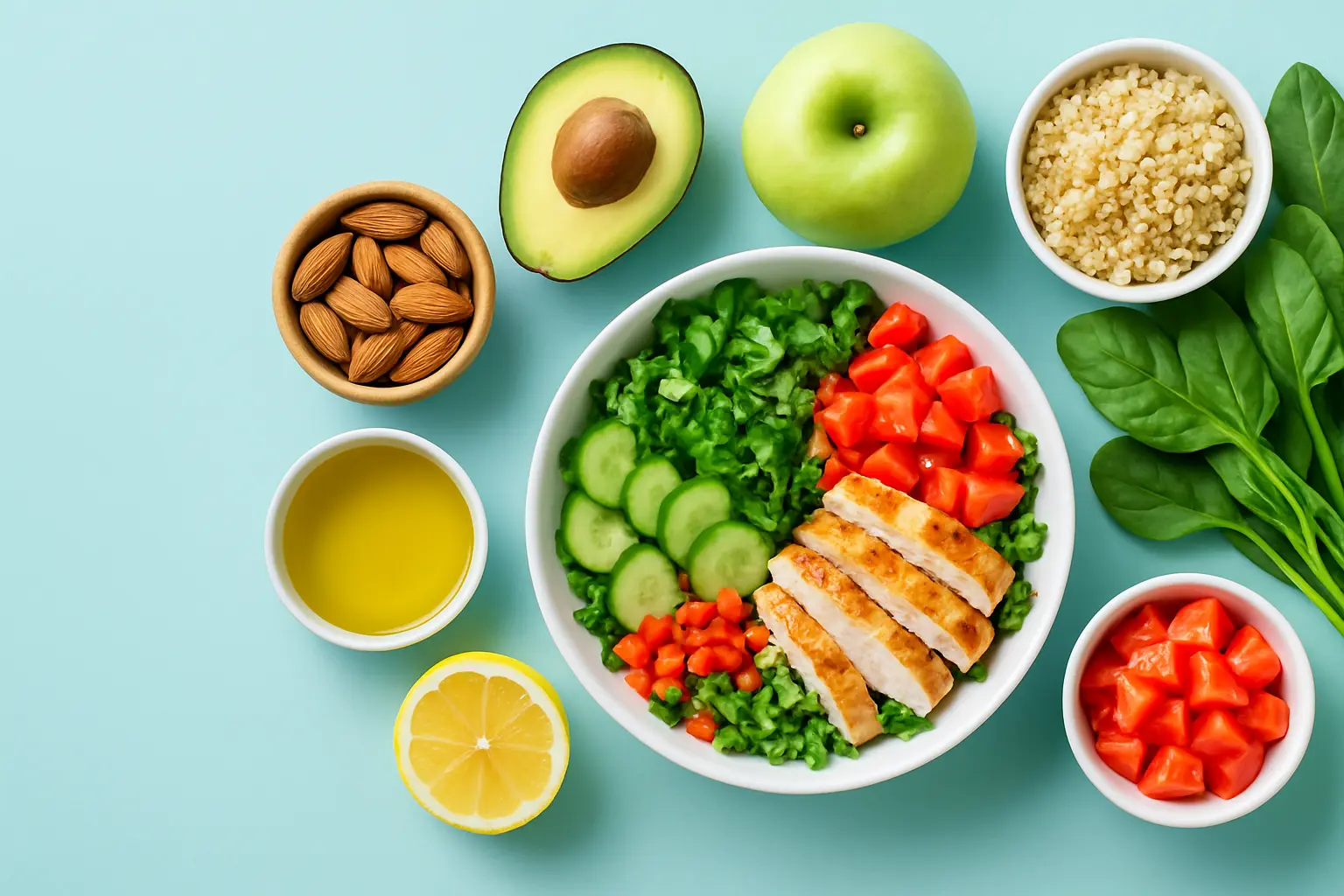
Meal idea: Grilled chicken bowl with steamed broccoli, roasted carrots, and a lemon-olive oil dressing.
2. Lean Proteins
Protein keeps your metabolism strong and helps preserve muscle while burning fat. It also curbs cravings and helps control blood sugar levels.
Great options include:
- Chicken breast, turkey, lean beef
- Salmon, tuna, and white fish
- Eggs, lentils, chickpeas, tofu
Meal idea: Scrambled eggs with spinach and whole grain toast for breakfast. Or baked salmon with quinoa and green beans.
3. Whole Grains
Whole grains digest more slowly, keeping you full longer and preventing blood sugar spikes. They’re also rich in fiber, magnesium, and B vitamins.
Choose:
- Oats, brown rice, quinoa
- Barley, bulgur, buckwheat
Meal idea: Overnight oats with chia seeds, blueberries, and almond butter.
4. Healthy Fats
Yes — you need fat to lose fat. Healthy fats regulate hormones and make meals more satisfying, helping you avoid late-night snacking.
Eat in moderation:
- Avocados
- Extra virgin olive oil
- Almonds, walnuts, flaxseeds, chia seeds
Meal idea: Avocado toast topped with sliced egg and sesame seeds.
5. Low-Glycemic Fruits
Fruit gives you natural sweetness without added sugar. Focus on low-glycemic fruits that won’t spike your blood sugar.
Great choices:
- Berries, apples, oranges, pears, kiwis
Snack idea: Apple slices with almond butter, or a small bowl of Greek yogurt with raspberries.
6. Fermented Foods
Gut health plays a big role in fat loss and cravings. Adding probiotic foods helps regulate digestion and inflammation.
Include:
- Sauerkraut, kimchi, miso
- Kefir, plain Greek yogurt
Meal idea: Grain bowl with chicken, roasted veggies, and a spoon of kimchi on the side.
What to Avoid When Trying to Lose Weight (Without Going Extreme)
Healthy weight loss eating isn’t just about what you include — it’s also about what you avoid. Many people unknowingly slow down their progress by falling into common traps. The key is to remove what’s holding you back without falling into extreme restrictions.
Here are the biggest mistakes to watch out for:
1. Skipping Meals or Severely Restricting Calories
Cutting too many calories may lead to short-term weight loss, but it often backfires. Your body slows down your metabolism, increases cravings, and stores fat more easily.
Instead of starving yourself, focus on balanced healthy meals that give you energy while staying in a calorie deficit.
Pro tip: Don’t drop below 1,200–1,500 calories a day unless medically supervised.
2. Eating “Diet” or “Low-Fat” Processed Foods
Many products labeled “low-fat” or “sugar-free” are packed with artificial ingredients, sodium, and hidden sugars. These foods can disrupt hormones, digestion, and appetite signals.
Stick to whole, minimally processed foods whenever possible — the foundation of any healthy weight loss eating approach.
3. Drinking Your Calories
Sodas, smoothies, flavored coffees, and even fruit juices can silently add hundreds of calories per day without filling you up.
Better choices:
- Water
- Sparkling water with lemon
- Unsweetened iced tea
- Black coffee
Liquid calories don’t trigger the same fullness response — making weight loss harder.
4. Relying Too Much on Willpower Alone
Weight loss isn’t just about “trying harder.” If your environment is filled with temptations — cookies on the counter, fast food on speed dial — your willpower won’t last forever.
Instead, set yourself up for success: prep meals ahead, remove junk from your house, and keep healthy snacks visible and easy to grab.
5. Cutting Out Entire Food Groups
Eliminating all carbs or fats is rarely sustainable and can lead to nutrient deficiencies. Unless you have medical reasons (like gluten intolerance), avoid extreme diets.
Healthy weight loss eating is about balance, not deprivation. You can enjoy carbs, fats, and even the occasional treat — in the right context.
Sample One-Day Healthy Weight Loss Eating Plan
It’s one thing to know what to eat — but putting it all together into real-life meals makes a huge difference. A good plan keeps your energy high, your metabolism active, and your hunger under control.
Here’s a practical one-day healthy weight loss eating plan you can follow or adapt to your lifestyle:
Breakfast: Protein-Powered Oat Bowl
A satisfying breakfast helps control cravings throughout the day.
Meal idea:
- ½ cup rolled oats cooked in water or almond milk
- 1 boiled egg on the side
- Topped with blueberries, chia seeds, and a spoon of almond butter
- Black coffee or green tea
Why it works: Protein + fiber + healthy fats = full until lunch.
Snack #1: Greek Yogurt & Berries
Quick, refreshing, and gut-friendly.
Meal idea:
- 1 small bowl of plain Greek yogurt
- A handful of raspberries or strawberries
- Sprinkle of flax or hemp seeds
Optional: Add a drizzle of honey if you’re new to low-sugar eating.
Lunch: Balanced Grain Bowl
Easy to prep ahead and take to work.
Meal idea:
- Grilled chicken or chickpeas
- ½ cup cooked quinoa
- Roasted veggies (zucchini, bell peppers, carrots)
- Avocado slices and tahini-lemon dressing
Why it works: Balanced macros, tons of fiber, and deeply satisfying.
Snack #2: Apple + Nut Butter
Classic, crunchy, and perfectly portable.
Meal idea:
- 1 apple sliced
- 1 tbsp natural peanut or almond butter
Pro tip: This combo stabilizes blood sugar and curbs late-afternoon cravings.
Dinner: Light but Nourishing Stir-Fry
A great way to finish the day without feeling heavy.
Meal idea:
- Stir-fried tofu or shrimp with broccoli, mushrooms, and snow peas
- Garlic, ginger, low-sodium soy sauce
- Side of cauliflower rice or a small portion of brown rice
Why it works: High in volume, low in calories, rich in nutrients.
Common Myths About Healthy Weight Loss Eating
In the world of weight loss, there’s no shortage of confusing advice — and unfortunately, much of it is based on outdated or incorrect beliefs. Let’s debunk some of the most common myths about healthy weight loss eating so you can focus on what really works.
1. “You have to cut out all carbs to lose weight.”
Not true. Carbs are your body’s main source of energy — and eliminating them completely can leave you tired, irritable, and more likely to binge later.
Instead, focus on complex carbs like oats, quinoa, and brown rice. These support healthy weight loss eating by keeping you full and fueling your workouts.
2. “Eating after 6 PM makes you gain fat.”
It’s not about when you eat — it’s about how much and what you eat. Your body doesn’t magically store more fat after a certain hour.
If you’re eating balanced, calorie-controlled meals, having dinner at 8 PM won’t sabotage your results. What matters is your total intake across the day.
3. “Fat is bad and should be avoided.”
Not all fats are created equal. While trans fats and deep-fried foods are harmful, healthy fats like avocado, olive oil, and nuts are essential for hormone regulation, brain function, and — yes — fat loss.
Healthy weight loss eating includes moderate amounts of fat. It helps you feel full and satisfied after meals.
4. “You need to eat less than 1,000 calories to lose weight fast.”
Extreme calorie restriction can lead to muscle loss, metabolic slowdown, and burnout. It’s not sustainable — and it can be dangerous.
Aim for a modest calorie deficit (usually 300–500 calories per day) and focus on nutrient-dense, whole foods.
5. “Healthy food is boring and tasteless.”
Only if you let it be! Real, healthy meals can be vibrant, flavorful, and deeply satisfying. Think spicy stir-fries, colorful grain bowls, savory soups, or high-protein breakfast wraps.
Healthy weight loss eating should be something you enjoy — not something you dread.
Frequently Asked Questions (FAQ)
What is healthy weight loss eating?
Healthy weight loss eating is a balanced, sustainable approach to nutrition that supports fat loss without extreme dieting. It emphasizes whole, nutrient-dense foods like vegetables, lean proteins, whole grains, and healthy fats — while reducing processed foods and added sugars. The goal is to fuel your body well while maintaining a calorie deficit over time.
Can I still eat carbs and lose weight?
Yes — absolutely. Carbs are not the enemy. The key is choosing quality carbs, like oats, quinoa, brown rice, and legumes. These foods are rich in fiber and digest slowly, keeping you full longer and supporting energy levels throughout the day.
How many meals should I eat per day to lose weight?
There’s no one-size-fits-all answer. Some people succeed with three structured meals, others with five smaller meals and snacks. What matters most is that your daily calories are controlled and your meals are built around whole, healthy foods. Healthy weight loss eating should work with your lifestyle — not against it.
What foods should I completely avoid?
There’s no need to “ban” foods unless you have a medical reason. That said, it’s smart to minimize:
- Sugary drinks and sodas
- Highly processed snacks (chips, pastries)
- Fried fast food
- Artificial sweeteners (in excess)
Remember, moderation is key. An occasional treat won’t ruin your progress if your foundation is solid.
Do I need to count calories to eat for weight loss?
Not necessarily. While calorie awareness is important, you can succeed without tracking every bite. Start by building meals using:
- A source of protein
- Plenty of fiber-rich veggies
- A portion of healthy fat
- Complex carbs in moderation
This structure naturally supports healthy weight loss eating — with or without calorie counting.
How fast will I lose weight with a healthy eating plan?
Safe, sustainable weight loss is around 0.5 to 1 kg (1 to 2 pounds) per week. Results vary based on your starting point, metabolism, consistency, and physical activity. Fast isn’t always better — what matters is losing weight in a way you can maintain long term.
Can I follow healthy weight loss eating while working full-time?
Yes! Meal prep is your best friend. Batch-cook on Sundays, plan simple lunches for work, and keep healthy snacks on hand. You don’t need hours in the kitchen — just 15–20 minutes per day of planning can keep you consistent.
Conclusion: Real Change Starts with Simple, Healthy Eating
Losing weight doesn’t require starving yourself, skipping meals, or following strict fad diets. What truly works — and lasts — is a consistent, balanced, and enjoyable approach to food. That’s what healthy weight loss eating is all about.
From choosing high-fiber vegetables and lean proteins to avoiding processed pitfalls and learning how to build satisfying meals, you now have all the tools to take action — not just for a few weeks, but for life.
And the best part? You don’t have to be perfect. Small, consistent choices lead to big, long-term results. Start with one change today — maybe a better lunch, a mindful dinner, or prepping meals for the week — and build from there.
Want to speed up your fat loss and recovery? Check out our complete guide on what to eat after a HIIT workout to learn how to refuel your body with the right nutrients.
👉 If you found this guide helpful, don’t forget to share it or leave a comment below.
Looking for more support? Explore our other articles on fitness nutrition, smart workouts, and healthy habits to keep your momentum going!
You’ve got this — and we’re here to help every step of the way.