

Macronutrient Explained: The Ultimate Beginner’s Guide to Fueling Your Body
If you’ve ever wondered what a macronutrient really is or why everyone at the gym keeps talking about “macros,” you’re not alone. The truth is, understanding macronutrients isn’t just for bodybuilders or nutritionists — it’s for anyone who wants to fuel their body the right way.
Whether you’re trying to lose weight, gain muscle, or simply boost your energy levels, knowing how each macronutrient works can completely transform how you eat. From carbs that power your workouts to fats that support your hormones and proteins that rebuild your tissues, each macronutrient plays a vital role in your health.
In this beginner-friendly guide, we’ll break down everything you need to know: what a macronutrient is, how it functions, how to balance them in your meals, and how to use this knowledge to achieve your fitness or wellness goals — without the stress of calorie-counting.
Let’s dive into the science and simplicity of macronutrients — one bite at a time.
What Are Macronutrients?
A macronutrient is a type of nutrient that your body needs in large amounts to function properly. Unlike vitamins and minerals — which are considered micronutrients — macronutrients provide the bulk of your energy and support essential physiological processes like muscle growth, digestion, and hormone production.
There are three primary types of macronutrients:
- Carbohydrates – your body’s main fuel source
- Proteins – the building blocks for muscle and tissue repair
- Fats – critical for brain health, hormone function, and long-term energy
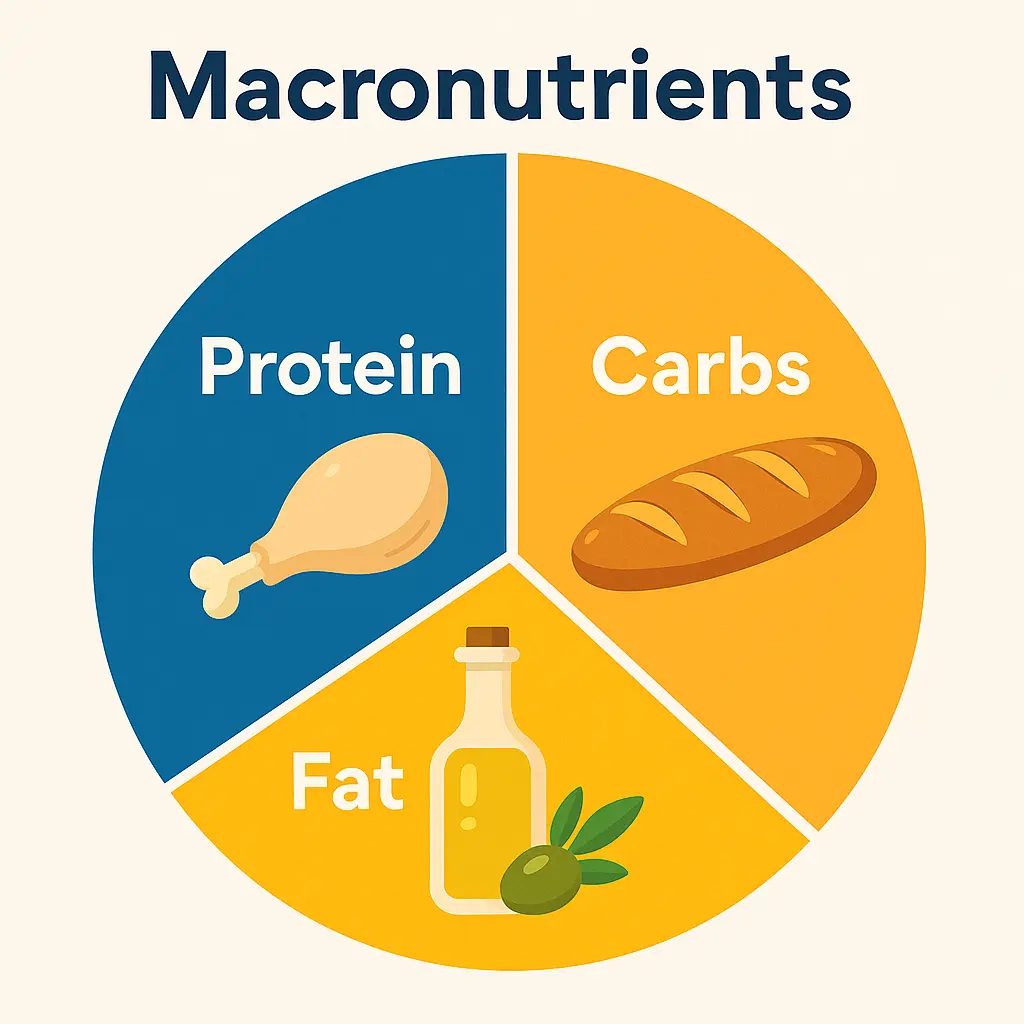
Each macronutrient has a specific calorie value per gram:
- Carbohydrates = 4 calories/gram
- Proteins = 4 calories/gram
- Fats = 9 calories/gram
While water is technically not a macronutrient in the classic sense (because it provides no calories), it’s still considered essential and is often grouped separately as a vital nutrient for survival and metabolic regulation.
In short, every bite you take is made up of one or more macronutrients — and learning how to balance them is the foundation of good nutrition.
Macronutrients vs Micronutrients: Why the Difference Matters
Understanding the difference between a macronutrient and a micronutrient is key to building a well-rounded approach to nutrition. While both are essential to health, they serve different roles in your body — and they’re required in vastly different amounts.
Macronutrients: The Energy Providers
A macronutrient is consumed in large quantities and is your body’s primary source of energy. Every meal you eat likely contains all three major macronutrients: carbohydrates, proteins, and fats.
These nutrients don’t just fuel your workouts — they also power your brain, regulate your metabolism, help with hormone production, and support recovery. They’re the building blocks of your daily energy expenditure.
For example:
- Carbs fuel your muscles and central nervous system.
- Proteins repair tissues and aid in muscle synthesis.
- Fats help absorb certain vitamins and provide long-lasting energy.
Without the right macronutrient balance, your body can feel sluggish, your workouts may suffer, and your recovery can slow down.
Micronutrients: The Silent Support System
Micronutrients — like vitamins (A, B, C, D, E, K) and minerals (iron, calcium, magnesium, zinc) — are needed in much smaller amounts, but they’re just as essential.
They don’t directly supply energy, but they play crucial roles in:
- Immune function
- Bone health
- Cognitive performance
- Enzyme activation
- Cellular repair
You can think of macronutrients as the fuel and micronutrients as the oil that keeps the engine running smoothly.
Why This Distinction Is Important
Many people focus on calorie counting without considering the quality or balance of their macronutrient intake. Others obsess over supplements and forget the basics: if your macronutrient intake is off, no amount of vitamins will fix poor energy levels or subpar muscle recovery.
So if you’re building a nutrition plan — whether for fat loss, muscle gain, or just better energy — understanding the balance between macronutrients and micronutrients is where it all begins.
The Role of Macronutrients in the Body
Each macronutrient plays a unique and irreplaceable role in keeping your body functioning, energized, and resilient — whether you’re hitting the gym, working a desk job, or chasing after toddlers.
Let’s break it down.
1. Carbohydrates – The Fast Fuel
Carbohydrates are the body’s preferred source of energy. Once consumed, they’re broken down into glucose, which fuels your brain, muscles, and central nervous system.
If you’ve ever felt sluggish during a workout or struggled to focus at work, chances are your macronutrient balance — especially carbs — wasn’t optimal.
Carbs help:
- Power short bursts of activity (like HIIT or sprinting)
- Replenish muscle glycogen after workouts
- Support mental focus and mood
✔️ Tip: Focus on whole carbs like fruits, oats, and sweet potatoes for longer-lasting energy.
2. Proteins – The Body’s Repair Crew
Protein is more than just a muscle-building tool — it’s a vital macronutrient for growth, healing, and hormone production. It provides the amino acids your body needs to:
- Build and maintain lean muscle mass
- Repair damaged tissue after exercise
- Support enzymes, neurotransmitters, and immune function
This macronutrient is especially important after resistance training or any intense physical activity.
✔️ Tip: Aim for lean sources like chicken, fish, eggs, tofu, or Greek yogurt.
3. Fats – The Long-Lasting Energy Source
Fats often get a bad reputation, but this macronutrient is essential for overall health and long-term energy.
Healthy fats:
- Help absorb fat-soluble vitamins (A, D, E, K)
- Protect your organs
- Support brain function and hormone balance
- Provide sustained energy, especially during low-intensity activities
✔️ Tip: Include fats like avocados, nuts, seeds, olive oil, and fatty fish in your daily nutrition plan.
4. Water – The Overlooked “Macronutrient”
While not a macronutrient in the traditional sense, water is often referred to as the forgotten nutrient. It makes up about 60% of your body and supports:
- Nutrient transport
- Temperature regulation
- Digestion and joint lubrication
- Physical performance and mental clarity
Dehydration can sabotage your efforts — even before you feel thirsty.
✔️ Tip: Drink at least 2–3 liters per day, and more around workouts.
The Balance Is Everything
Understanding how each macronutrient fuels your body is the first step. But the real magic happens when you get the right balance — tailored to your goals, activity level, and preferences.
Too many carbs? You might feel bloated and sluggish.
Too little fat? Your hormones could suffer.
Not enough protein? Say goodbye to muscle definition.
Learning to balance your macronutrient intake is one of the smartest investments in your long-term health and performance.
Macronutrient Breakdown – Carbs, Proteins, and Fats Explained
Understanding the three main types of macronutrients — carbohydrates, proteins, and fats — is essential if you want to build a sustainable, high-performing diet.
Let’s dive deeper into how each macronutrient functions and how to use it wisely.
🥖 Carbohydrates: Energy That Moves You
Carbohydrates are your body’s go-to fuel source. Whether you’re lifting weights or running errands, this macronutrient keeps your body and brain powered.
Types of carbs:
- Simple carbs: quick energy (fruits, honey, white bread)
- Complex carbs: longer-lasting fuel (whole grains, legumes, veggies)
Benefits of carbohydrates:
- Maintain blood sugar levels
- Fuel the brain and muscles
- Improve exercise performance
- Boost recovery post-workout
✔️ Best sources: oats, quinoa, brown rice, bananas, sweet potatoes, berries
🍗 Proteins: The Foundation of Strength
Protein is the macronutrient responsible for building, maintaining, and repairing tissue.
It’s not just for bodybuilders — it supports immunity, hormone production, and overall recovery.
Why protein matters:
- Rebuilds muscle after training
- Promotes satiety (keeps you full)
- Helps regulate enzymes and hormones
- Prevents muscle loss when dieting
Recommended intake: 1.2–2.2g of protein per kg of body weight (varies by activity)
✔️ Top protein-rich foods: eggs, chicken, tofu, lentils, Greek yogurt, salmon, tempeh
🥑 Fats: Fuel, Hormones & Brain Power
Fats are a misunderstood but essential macronutrient. They play a crucial role in hormonal health, energy production, and nutrient absorption.
Types of fats:
- Unsaturated fats (healthy): olive oil, nuts, seeds, avocado, fatty fish
- Saturated fats (moderation): butter, cheese
- Trans fats (avoid): processed snacks, fried foods
Benefits of healthy fats:
- Protect organs
- Support hormone production
- Enhance brain function
- Improve skin and cell health
- Provide long-lasting energy
✔️ Fat-smart tip: Aim for unsaturated fats in each meal for balance and performance.
📊 Macronutrient Ratios: One Size Doesn’t Fit All
There’s no “perfect” ratio of macronutrients for everyone.
Your ideal balance depends on:
- Your fitness goals (fat loss, muscle gain, maintenance)
- Your daily activity level
- Your body type and metabolism
- Any dietary preferences (e.g., plant-based, keto, paleo)
✔️ Example macronutrient splits:
- For fat loss: 40% protein / 30% carbs / 30% fats
- For muscle gain: 40% carbs / 30% protein / 30% fats
- For endurance athletes: 50% carbs / 25% protein / 25% fats
Use these as starting points — then adjust based on how you feel and perform.
How to Calculate Your Macronutrient Needs (Using a Macronutrients Calculator)
Understanding what it is won’t take you far unless you also know how much your body needs. This step is essential whether your goal is to lose fat, build muscle, or simply maintain a balanced lifestyle.
But how do you calculate your exact needs? That’s where the macronutrients calculator comes in.
Step 1: Know Your Caloric Needs First
Before breaking down your macronutrient intake, you need to determine your Total Daily Energy Expenditure (TDEE) — the number of calories you burn in a day, factoring in your activity level.
You can use free TDEE calculators online, or estimate it like this:
TDEE = BMR × Activity Factor
- BMR (Basal Metabolic Rate) depends on your age, sex, weight, and height.
- Activity Factor ranges from 1.2 (sedentary) to 2.0+ (very active).
Let’s say your TDEE is 2,200 calories/day. Now it’s time to split them into macronutrients.
Step 2: Choose Your Macro Ratio
The ratio of macronutrients varies based on your goal:
| Goal | Carbs | Protein | Fat |
|---|---|---|---|
| Fat Loss | 40% | 35% | 25% |
| Muscle Gain | 45% | 30% | 25% |
| Maintenance | 50% | 25% | 25% |
| Keto Diet | 5% | 25% | 70% |
These are just frameworks — everyone’s body responds differently.
Step 3: Do the Math (or Use a Macronutrients Calculator)
Let’s apply it to our 2,200-calorie example with a fat loss macro split:
- Protein (35%): 770 cal → 770 ÷ 4 = 192g
- Carbs (40%): 880 cal → 880 ÷ 4 = 220g
- Fat (25%): 550 cal → 550 ÷ 9 = 61g
🧮 Want a shortcut? Use a Macronutrients Calculator — it will do the math for you, instantly adapting to your weight, goal, and activity.
💡 Pro Tip: Bookmark or embed your own macronutrients calculator page to help your readers calculate their targets anytime.
Step 4: Track and Adjust
Now that you’ve calculated your ideal macronutrient intake, consistency and tracking are key.
Use apps like:
- MyFitnessPal
- Cronometer
- MacroFactor
Watch how your body responds, then adjust your macronutrient ratio if needed. Energy low? Maybe you’re under-eating carbs. Not gaining muscle? You might need more protein.
Step 5: Common Mistakes When Tracking Macronutrients
Even with the best calculator and the right macro split, beginners (and even pros) often make avoidable mistakes. Here are the top ones to watch out for:
❌ 1. Not Weighing Your Food
You think you’re eating 100g of rice… but are you? Eyeballing portions often leads to major miscalculations. Use a digital food scale to improve accuracy.
❌ 2. Forgetting Hidden Calories
That tablespoon of peanut butter? The oil you cooked with? The bites you sneak from the fridge?
➡️ They count. And they can add up quickly. Track everything.
❌ 3. Obsessing Over Perfection
Yes, consistency matters — but don’t aim for 100% perfect macros daily.
A 5–10% range is totally fine for most people. Don’t let a small deviation ruin your motivation.
❌ 4. Ignoring Progress Signs
If your weight, energy, sleep, and training performance are improving — you’re on the right track.
Your macros might not be textbook-perfect, but your results matter more than numbers alone.
❌ 5. Not Adjusting Over Time
Your macro needs evolve:
- You lose weight → you need fewer calories.
- You train harder → you may need more carbs.
- You build muscle → protein needs may rise.
👉 Recalculate your macros every few weeks using your Macronutrients Calculator.
Advanced Tips for Mastering Your Macronutrients
Once you’ve nailed the basics — your calorie needs, macro split, and tracking habits — it’s time to level up. These advanced tips will help you truly master the art of macronutrients, whether you’re training for performance, fat loss, or optimal wellness.
1. Periodize Your Macros Like an Athlete
Your body doesn’t stay the same every day — so why should your macros?
Periodization means adjusting your macronutrient intake based on your training cycle, recovery days, or even phases of the year (like a bulking vs. cutting season).
- On high-intensity training days → boost carbs for energy and recovery.
- On rest days → reduce carbs slightly and prioritize protein and healthy fats for muscle repair.
- During cutting phases → maintain high protein to preserve lean mass while slightly lowering fats and carbs.
📌 Tip: Keep a 3-day food journal during each phase to compare how your body responds.
2. Customize Macros Based on Body Type & Genetics
Not everyone thrives on the same macro split. Your somatotype (body type) and even your genetics can influence how well you respond to carbs or fats.
- Ectomorphs (naturally thin) → tend to perform well with higher carbs.
- Endomorphs (prone to fat gain) → may benefit from higher fats, moderate protein, and lower carbs.
- Mesomorphs (muscular, athletic) → usually thrive on balanced macros.
🧬 You can also explore DNA-based nutrition tests if you want deep personalization, though it’s not essential to get results.
3. Understand Nutrient Timing for Better Results
You’ve heard the phrase: “It’s not just what you eat — it’s when you eat.” That’s where nutrient timing comes into play.
- Pre-workout (30–60 minutes before): Focus on carbs + protein for energy and performance.
- Post-workout (within 1 hour): Prioritize protein + carbs to replenish glycogen and repair muscles.
- Evening meals: Emphasize protein and fats to stabilize blood sugar overnight.
⌛ Note: You don’t need to obsess over the clock — but aligning your meals with your activity improves recovery and performance.
4. Learn to Adjust Without Obsession
Tracking macros is powerful — but flexibility is just as important. Life happens. You travel. You eat out. You celebrate.
Instead of trying to hit perfect numbers every day:
- Focus on weekly consistency, not daily perfection.
- Use macro ranges (e.g., protein: 130–150g) to reduce pressure.
- Practice intuitive tracking: once you know your portions, trust your eyes and hunger cues.
💡 Mastery isn’t about strict control. It’s about understanding your body deeply enough to know when to tighten up — and when to relax.
5. Quality Still Matters
Tracking macros doesn’t give you a free pass to eat junk. 100g of protein from chicken and veggies ≠ 100g of protein from fast food.
Macronutrients are about quantity, but quality is what fuels your results long-term.
Choose whole, minimally processed sources whenever possible:
- Carbs: quinoa, sweet potatoes, oats, berries
- Proteins: eggs, salmon, Greek yogurt, tofu
- Fats: avocado, olive oil, almonds, chia seeds
🚫 Avoid ultra-processed snacks with hidden sugars, artificial ingredients, and empty calories.
🟢 Takeaway
When it comes to macronutrients, beginners often think it’s all about the numbers. But the deeper you go, the more you realize: it’s about strategy, personalization, and sustainability. Mastering your macros means understanding your body, respecting your lifestyle, and staying flexible for the long game.
👉 Ready to take full control of your diet? Try our Macronutrients Calculator or bookmark this guide to return anytime you need to recalibrate your nutrition.
FAQ – Macronutrients: Everything You Need to Know
What is a macronutrient, in simple terms?
A macronutrient is a nutrient your body requires in large amounts to function well. These include carbohydrates, proteins, and fats — the key sources of energy that fuel everything your body does, from brain activity to building muscle.
How many macronutrients should I eat per day?
Your ideal intake depends on your total calorie needs and your goal (fat loss, maintenance, or muscle gain). A common example:
- For fat loss: 40% carbs / 35% protein / 25% fat
- For muscle gain: 45% carbs / 30% protein / 25% fat
You can use a macro calculator to get a custom breakdown based on your age, weight, and activity level.
Are calories and macronutrients the same thing?
Not exactly. Calories measure energy. Macronutrients (carbs, proteins, fats) provide that energy:
- Carbohydrates: 4 calories per gram
- Protein: 4 calories per gram
- Fat: 9 calories per gram
So yes, they’re related — but not interchangeable.
What are the best food sources for each macronutrient?
Choosing whole, nutrient-dense foods will help you hit your macro goals:
- Carbs: oats, quinoa, sweet potatoes, fruits, brown rice
- Proteins: chicken, fish, tofu, lentils, eggs, Greek yogurt
- Fats: avocado, olive oil, nuts, seeds, fatty fish
Avoid processed foods with trans fats or hidden sugars.
Do I need to track macros every day?
Not forever. Tracking is a helpful tool, especially when starting or working toward a specific goal (like cutting or bulking). Over time, you can shift to intuitive eating once you understand portion sizes and macro balance.
Can I eat too much of a “healthy” macronutrient?
Absolutely. Even healthy foods can disrupt your balance if eaten in excess:
- Too many carbs = sluggishness and fat gain
- Too much fat = hormonal issues for some people
- Too much protein = strain on kidneys or digestive stress
Balance is key — quality and quantity both matter.
What if I’m plant-based or vegan — can I hit my macros?
Yes, with proper planning. You’ll want to include a variety of plant-based sources:
- Carbs: legumes, fruits, whole grains
- Proteins: tofu, tempeh, lentils, seitan, quinoa
- Fats: flaxseed, chia, avocado, nuts, olive oil
Combine multiple protein sources to ensure all essential amino acids are covered.
Which is more important: calorie intake or macronutrient split?
Both matter — but for different reasons. Calories affect your overall energy balance (weight loss or gain), while macros affect performance, muscle retention, and hormone health. A well-calculated macro split can help you reach your goals more efficiently.
Final Thoughts on Macronutrient Balance
Understanding what a macronutrient is — and how it fuels your body — is one of the smartest things you can do for your health, energy, and performance. Whether you’re training hard, trying to lose weight, or simply looking to eat better, getting your macronutrient ratio right can make a massive difference.
Remember, it’s not just about counting numbers. It’s about creating a sustainable way of eating that supports your goals and feels good in the long run. Focus on real foods, adjust based on how your body responds, and don’t stress perfection — progress is what counts.
Need a hand dialing in your macros?
👉 Try our free Macronutrients Calculator to get your custom daily breakdown and start optimizing your meals today.